GHK-Cu: The Copper Tripeptide, from Structure to Vial Math
What GHK-Cu is, what the copper atom changes, how the 50 mg vial reconstitutes, and why its molecular weight matters for molar work.
GHK-Cu: Structure and Vial Math
GHK-Cu is one of the smallest peptides in the catalog — three amino acids plus a copper ion. Researchers usually come to it for one of two reasons: the copper biochemistry, or the reconstitution math on a 50 mg vial. This guide covers both.
What the molecule is
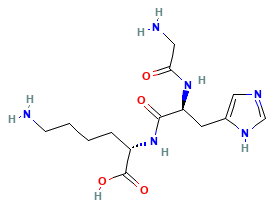
GHK-Cu is the copper complex of glycine-histidine-lysine, a tripeptide first identified in human blood plasma. The full complex formula is C₁₄H₂₄N₆O₄Cu — and that copper atom is not decorative. The literature treats GHK and GHK-Cu as distinct subjects: the copper complex is the one referenced in fibroblast activity, collagen synthesis, and wound-repair pathway models.
The molecular weight works out to about 403.9 g/mol. It’s small, which matters when a protocol specifies molar concentrations — the calculator handles the formula directly.
Reconstituting the 50 mg vial
The 50 mg vial is the largest lyophilized peptide we carry, and that changes the numbers people expect:
- 50 mg = 50,000 µg
- With 2 mL bacteriostatic water: 25,000 µg/mL — each 0.1 mL holds 2,500 µg
- A 1,000 µg target dose = 40 µL = 4 units on a U-100 syringe
- With 5 mL water: 10,000 µg/mL, and the same 1,000 µg dose = 100 µL = 10 units
The reconstitution calculator has the GHK-Cu preset at 50 mg, so no mental math needed — but running it both ways is a good habit for double-checking lab work.
Practical handling
Lyophilized GHK-Cu stores at −20 °C; reconstituted solutions go in the refrigerator and follow the Certificate of Analysis window. The copper can tint a solution faintly blue at higher concentrations — a harmless physical property, not a sign of degradation, though it’s worth knowing so it doesn’t surprise a protocol log.
See GHK-Cu for purity (99.7%) and full specifications.
For laboratory research use only. Not medical advice.
FAQ
Frequently asked questions
What is GHK-Cu exactly?
GHK-Cu (copper tripeptide-1) is the naturally occurring copper complex of the glycine-histidine-lysine tripeptide, studied in fibroblast activity, collagen synthesis and wound-repair models.
How do I reconstitute the 50 mg vial?
The 50 mg vial works like any lyophilized peptide: add bacteriostatic water, divide by volume for concentration. 2 mL gives 25,000 µg/mL; a 1,000 µg dose is 40 µL (4 units on U-100).
Why is the copper important?
The copper ion is part of the peptide's reported activity profile — the tripeptide without copper (GHK) behaves differently in the literature, which is why the complex is specified.
Keep reading
Related articles
Peptide Reconstitution: A Practical Guide to BAC Water Math
How to reconstitute lyophilized research peptides with bacteriostatic water — concentration math, U-100 syringe units, storage, and common mistakes.
Peptide Storage and Stability: Keeping Your Research Vials Sound
Lyophilized vs reconstituted storage, −20 °C vs 2–8 °C, freeze-thaw effects, and the practical rules that protect expensive research material.
Bacteriostatic Water: The Solvent Behind Every Vial
What bacteriostatic water is, why the 0.9% benzyl alcohol matters, and how it fits into lyophilized compound reconstitution.
Laboratory tools
Put it into practice
From the catalog
Reference compounds
GHK-Cu
Copper tripeptide-1. Tissue regeneration studies.
CAS 49557-75-7
50mg vial · In stock

Bacteriostatic Water
0.9% benzyl alcohol, sterile USP-grade solvent.
CAS 7732-18-5
10mL vial · In stock
For laboratory research use only